Breast reconstruction: what are the options?

Breast reconstruction is an important step for many women following a mastectomy performed as part of breast cancer treatment. Whilst each patient’s journey is different, one point is often overlooked: there is no single reconstruction solution, but rather several approaches that can be considered depending on each individual’s needs and medical circumstances.
Implant-based reconstruction
Implant-based reconstruction is one of the best-known techniques. It involves restoring breast volume using an implant placed during surgery.
This approach is widely used and may be a suitable solution in certain clinical situations. Like any technique, however, it has specific indications, advantages and limitations that must be assessed with the medical team.
Autologous reconstruction
Autologous reconstruction involves using the patient’s own tissue, usually taken from another part of the body.
This approach aims to reconstruct the breast using living tissue and is now a recognised option in many treatment pathways.
Combined techniques
Some reconstructions combine several approaches to best meet the patient’s needs. These combined techniques allow the reconstructive strategy to be tailored to each clinical situation.
The contribution of tissue engineering and regenerative medicine
Advances in tissue engineering are now opening up new possibilities in breast reconstruction.
The aim of these approaches is to promote the gradual development of new tissue by harnessing the body’s regenerative capabilities.
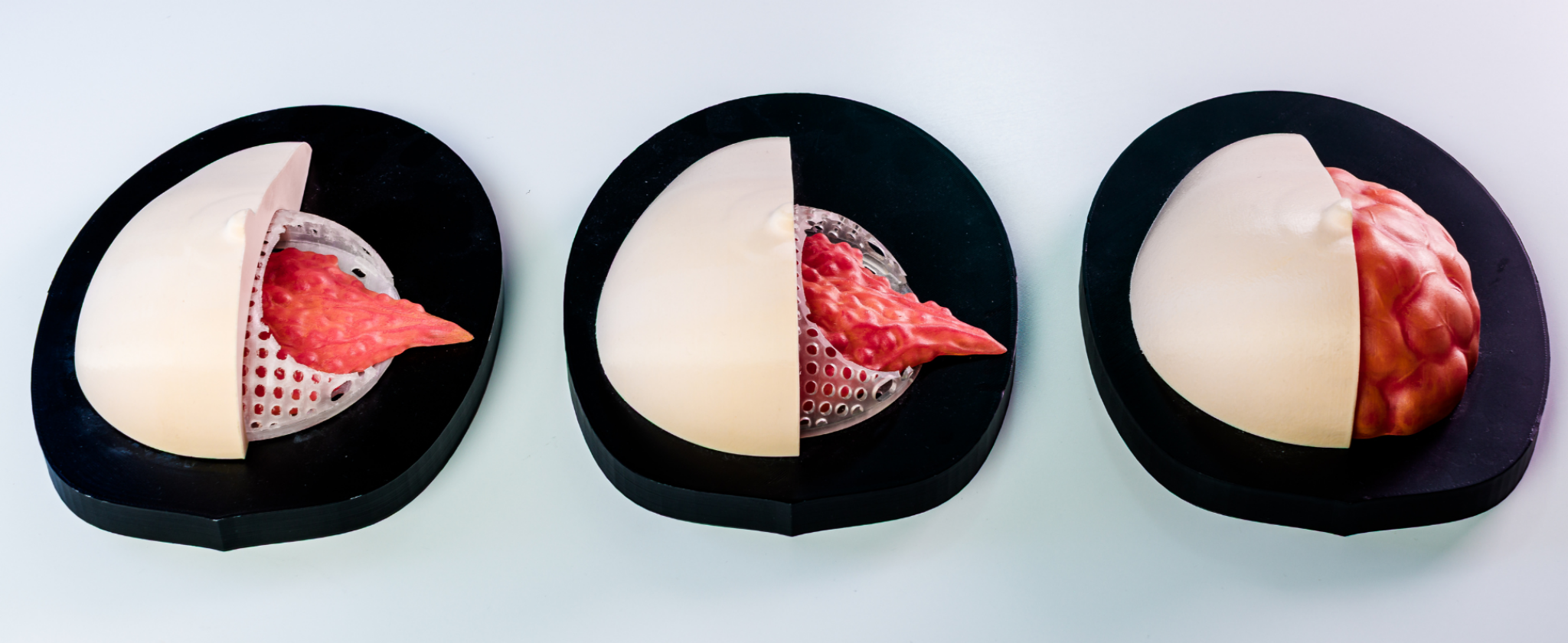
The image shown illustrates the principle behind our MATTISSE tissue engineering chamber. This type of device is designed to support the gradual growth of the patient’s own tissue as part of an autologous reconstruction.
Reconstruction tailored to each patient
Every patient’s journey is unique. The choice of reconstruction technique depends on many factors: medical history, treatments received, body type, the patient’s preferences and the recommendations of healthcare professionals.
The challenge is therefore not to determine a one-size-fits-all solution, but to enable every woman to access the option best suited to her situation.
Advances in surgical techniques, biomaterials and tissue engineering are now helping to broaden the possibilities available to patients and to envision the reconstruction solutions of tomorrow.